
Basic rule: Different users for every role and different permissions for every role.
In this case we are creating the user "newvem" and giving it full read access to our AWS set up using the IAM new user creating wizard.
Create user:

User: newvem

Download the recently created Security Credentials for this user:

Choose Read Only Access template for this user:

Apply:
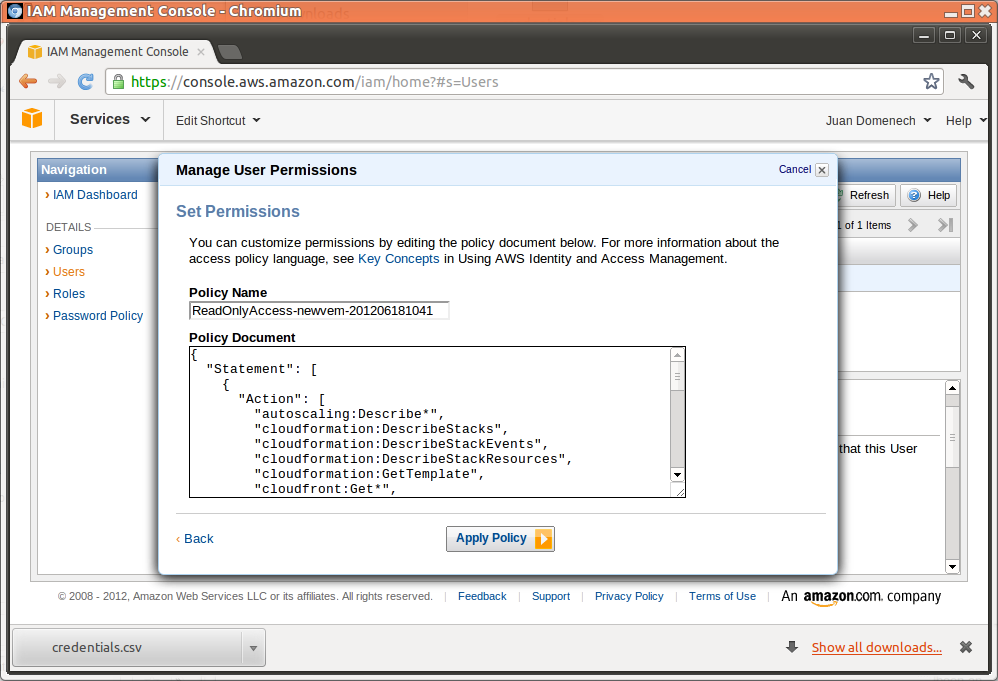
Those are the default granted permissions. We now have the option to tune them a bit in the future if needed:
| { "Statement": [ { "Action": [ "autoscaling:Describe*", "cloudformation:DescribeStacks", "cloudformation:DescribeStackEvents", "cloudformation:DescribeStackResources", "cloudformation:GetTemplate", "cloudfront:Get*", "cloudfront:List*", "cloudwatch:Describe*", "cloudwatch:Get*", "cloudwatch:List*", "dynamodb:GetItem", "dynamodb:BatchGetItem", "dynamodb:Query", "dynamodb:Scan", "dynamodb:DescribeTable", "dynamodb:ListTables", "ec2:Describe*", "elasticache:Describe*", "elasticbeanstalk:Check*", "elasticbeanstalk:Describe*", "elasticbeanstalk:List*", "elasticbeanstalk:RequestEnvironmentInfo", "elasticbeanstalk:RetrieveEnvironmentInfo", "elasticloadbalancing:Describe*", "iam:List*", "iam:Get*", "route53:Get*", "route53:List*", "rds:Describe*", "s3:Get*", "s3:List*", "sdb:GetAttributes", "sdb:List*", "sdb:Select*", "ses:Get*", "ses:List*", "sns:Get*", "sns:List*", "sqs:GetQueueAttributes", "sqs:ListQueues", "sqs:ReceiveMessage", "storagegateway:List*", "storagegateway:Describe*" ], "Effect": "Allow", "Resource": "*" } ] } |
Partial conversion of paperwork might be performed when chosen pages have to be transformed. As an example, in a file there are lots of pages, out of all, if you must decide up solely first three pages then you can choose them and simply these pages can be transformed leaving the remaining. onlineconvertfree
ReplyDelete